


Your snore could be
more than just sound
It’s your body’s red alert.
A Sleep Study (Polysomnography) is a painless, non-invasive diagnostic test used to identify sleep-related breathing disorders, especially Obstructive Sleep Apnea (OSA). It monitors your breathing, oxygen levels, heart rate, and sleep patterns while you sleep.
Sleep disorders often go unnoticed but can seriously affect your heart health, energy levels, and quality of life for level 2 and level 3 Sleep Studies.
Book your free Sleep consultation
Who Needs a Sleep Test?
If you feel any of these?
🩺 Consult a Sleep Specialist or Physician
Speak with a doctor or sleep specialist who can evaluate your symptoms and medical history. Early consultation helps prevent long-term complications like heart disease and stroke.
🛏️Undergo a Sleep Study
A sleep study (polysomnography) is the gold standard for diagnosing OSA. Home Sleep Study – comfortable, convenient, and reliable Lab Sleep Study – detailed monitoring under supervision This test measures breathing, oxygen levels, heart rate, and sleep patterns.
📊 Review Your Sleep Study Report
Based on your results, OSA is classified as: Mild Moderate Severe This helps determine the right treatment plan for you.
😷 Start the Right Treatment
Treatment options may include: CPAP or BiPAP therapy (most effective treatment) Mask fitting and pressure titration Lifestyle changes (weight management, sleep position) Medical or surgical options (in specific cases)
🔄 Follow Up & Stay Consistent
Use therapy devices regularly Attend follow-up consultations Adjust masks or pressures if needed Monitor improvement in sleep quality and energy levels
Sleep interruptions could rob your body of deep, healing rest and recovery.
Night Disruptions
Sleep interruptions could rob your body of deep, healing rest and recovery.
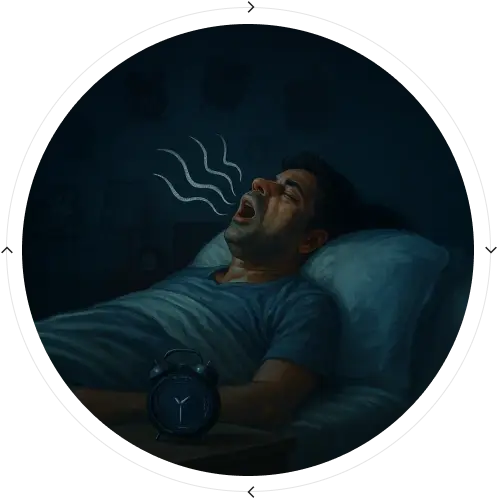

Daytime Damage
Persistent fatigue, brain fog, irritability, morning headaches, low productivity
FAQ's
OSA is a sleep disorder where breathing repeatedly stops and starts during sleep due to airway blockage. This leads to poor sleep quality and low oxygen levels.
Common symptoms include loud snoring, choking or gasping during sleep, excessive daytime sleepiness, morning headaches, poor concentration, and fatigue.
If you snore loudly, feel tired during the day, or your partner notices breathing pauses during sleep, you should undergo a sleep study for accurate diagnosis.
A sleep study is a painless diagnostic test that monitors breathing, oxygen levels, heart rate, and sleep patterns to diagnose sleep disorders like OSA.
Yes. Home Sleep Studies are convenient, comfortable, and accurate for diagnosing OSA. A small portable device is used while you sleep at home.
Yes. Untreated OSA can increase the risk of high blood pressure, heart disease, stroke, diabetes, and daytime accidents due to sleepiness.
CPAP or BiPAP therapy is the most effective treatment for moderate to severe OSA. It keeps the airway open during sleep.
Modern CPAP machines are quiet, compact, and comfortable. Proper mask fitting and gradual adjustment make therapy easy for most patients.